Which of these is different?

America is the “land of freedom” a “melting pot” and as Christians we’re taught to “love one another” but how has our attitude changed since 9/11?

From This American Life:

Serry and her husband’s love story began in a place not usually associated with romance: the West Bank. That was where the couple met, fell in love and decided to get married. Then Serry, who was American, convinced her Palestinian husband to move to America. She promised him that in America their children would never encounter prejudice or strife of any kind. But things didn’t quite work out that way.

How should we as Christian Americans respond to those around us who may not see eye to eye with us?

Also I learned in this particular podcast, there’s a statue of the prophet Muhammad in a federal building in Washington D.C. Didn’t know that.

In the 1930s, the designer of the U.S. Supreme Court made a frieze to adorn the courtroom walls. It depicted eighteen great lawgivers through ages, including Moses, Solon, Confucius…and Muhammad. The only problem is that Islam forbids such portrayals of the prophet. Host Ira Glass talks to Ibrahim Hooper, spokesman for the Council on American-Islamic Relations, about why the frieze is offensive to Muslims, and what they tried to do about it.

Interesting. Listen online.

Three answers to prayer

Sometimes we overlook the little things. Either saying they’re not worth wasting God’s time with or even if we do ask we forget to realize that He answers our prayers.

Today we’ve seen proof of three answered prayers.

  • Laurie’s raise was finally approved.
  • My allergies are MUCH better than they were over the weekend.
  • Someone’s stepped up and wants to lead the discussion for the new women’s group at encounter.

Praise God. Always good to remember God cares about the little things as much as the big things.

AcademHack

“Please on behalf of those who will listen to you, stop using PowerPoint, or at least stop using PowerPoint the way that it is commonly used.”

Just found AcademHack – via research on my last post about Twitter. The presentation above is from them. Wish I had one of Brian’s weekly PowerPoints – they’re usually right on with this idea.

AcademHack has some great stuff! I’m not in the classroom but there’s some great stuff here that could work for those in any type of leadership/teaching position… including community groups.

The GOP in 2008

Moby has some interesting thoughts on the current Republican Party in America.
Granted he’s definitely not a Republican…

sitting in my hotel room in london and i just finished watching bush’s final
state of the union address.
eh. to be honest it was kind of a non-event.
no nutty comments about steroids or trips to mars.
no new members in the axis-of-e-vil.
he just seemed sort of out of touch and a bit lost and sort of
desperate in a ‘uh oh, i don’t want to leave
office with a 25% approval rating’ kind of way.
it got me thinking about the state of the republican right in 2008.
and how fractured it is.
to make a big sweeping generalization, there are 4 big components
to the republican right(let’s use simpsons examples)-
1-the flanderses(aka-cultural evangelical conservatives)
2-mr burns and kent brockman(rich guys who don’t like taxes)
3-cletus and brandene(ignorant hicks who believe that barack obama lives in baghdad with wmd’s)
4-grampa simpson(scared and angry people over 70)

Moby suggests that the “flanderses like mike huckabee, mr burns likes mitt romney, cletus and brandene don’t know who they like but they know they don’t like hillary cos she wants to kill christmas, and grampa simpson likes john mccain cos he’s over 70 and doesn’t take sass from the young people.”

Wonder which Simpson character is a fan of Ron Paul?

A fairly broad paint brush of the GOP but probably not too far off. Thoughts?

Universal Declaration of Human Rights

Adopted and proclaimed by the United Nations General Assembly resolution 217 A (III) of 10 December 1948

On December 10, 1948 the General Assembly of the United Nations adopted and proclaimed the Universal Declaration of Human Rights the full text of which appears in the following pages. Following this historic act the Assembly called upon all Member countries to publicize the text of the Declaration and “to cause it to be disseminated, displayed, read and expounded principally in schools and other educational institutions, without distinction based on the political status of countries or territories.”

PREAMBLE

Whereas recognition of the inherent dignity and of the equal and inalienable rights of all members of the human family is the foundation of freedom, justice and peace in the world,

Whereas disregard and contempt for human rights have resulted in barbarous acts which have outraged the conscience of mankind, and the advent of a world in which human beings shall enjoy freedom of speech and belief and freedom from fear and want has been proclaimed as the highest aspiration of the common people,

Whereas it is essential, if man is not to be compelled to have recourse, as a last resort, to rebellion against tyranny and oppression, that human rights should be protected by the rule of law,

Whereas it is essential to promote the development of friendly relations between nations,

Whereas the peoples of the United Nations have in the Charter reaffirmed their faith in fundamental human rights, in the dignity and worth of the human person and in the equal rights of men and women and have determined to promote social progress and better standards of life in larger freedom,

Whereas Member States have pledged themselves to achieve, in co-operation with the United Nations, the promotion of universal respect for and observance of human rights and fundamental freedoms,

Whereas a common understanding of these rights and freedoms is of the greatest importance for the full realization of this pledge,

Now, Therefore THE GENERAL ASSEMBLY proclaims THIS UNIVERSAL DECLARATION OF HUMAN RIGHTS as a common standard of achievement for all peoples and all nations, to the end that every individual and every organ of society, keeping this Declaration constantly in mind, shall strive by teaching and education to promote respect for these rights and freedoms and by progressive measures, national and international, to secure their universal and effective recognition and observance, both among the peoples of Member States themselves and among the peoples of territories under their jurisdiction.

Article 1.

All human beings are born free and equal in dignity and rights. They are endowed with reason and conscience and should act towards one another in a spirit of brotherhood.

Article 2.

Everyone is entitled to all the rights and freedoms set forth in this Declaration, without distinction of any kind, such as race, colour, sex, language, religion, political or other opinion, national or social origin, property, birth or other status. Furthermore, no distinction shall be made on the basis of the political, jurisdictional or international status of the country or territory to which a person belongs, whether it be independent, trust, non-self-governing or under any other limitation of sovereignty.

Article 3.

Everyone has the right to life, liberty and security of person.

Article 4.

No one shall be held in slavery or servitude; slavery and the slave trade shall be prohibited in all their forms.

Article 5.

No one shall be subjected to torture or to cruel, inhuman or degrading treatment or punishment.

Article 6.

Everyone has the right to recognition everywhere as a person before the law.

Article 7.

All are equal before the law and are entitled without any discrimination to equal protection of the law.
All are entitled to equal protection against any discrimination in violation of this Declaration and against any incitement to such discrimination.

Article 8.

Everyone has the right to an effective remedy by the competent national tribunals for acts violating the fundamental rights granted him by the constitution or by law.
Continue reading Universal Declaration of Human Rights

U2 3D


U2 3D

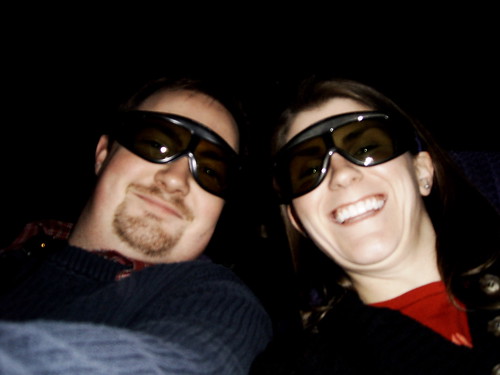
Laurie and I went and saw U2 3D this weekend. Awesome! It was way better than I expected and even more lifelike than I had imagined it expected.

I told Laurie afterwards that I was conflicted during the 80 minute IMAX concert experience. It was real enough that I felt like I was right smack dab in the middle of this concert in Argentina with several thousand fans around me. I wanted to take part in everything – yet I felt like I had to be restrained and remind myself I’m in public – in a theater. Of course if you know me, you know I love U2. It doesn’t take much “realism” for me to want to sing along.

Yet during the entire 80 minutes I sat quietly taking it all in and trying not to disturb my neighbors – or everyone in the theater behind me (especially since we were on the front row). Afterwards I was disappointed it came to an end and I actually felt like I had missed out on something. I couldn’t place my finger on it until I realized it was the interaction I missed.

I’ve been to one U2 concert and it was by far my most favorite concert ever. It felt as much of a worship service as a concert. And after leaving U2 3D it almost felt like I had been at church but only as a fly on the wall. I didn’t get to participate. All these people on the screen were involved and participating yet I sat on the sidelines.

I wonder how often we miss out in church because we don’t want to annoy the people next to us. We don’t want them to think we’re odd for standing up and cheering. We don’t want to be the crazy guy on the front (or back) row who won’t sit down.

What if we’re missing out on interaction with God? What if worship was so much more?