The delegate count as of this morning:
McCain – 613
Romney – 269
Huckabee – 190
Paul – 14
The delegate count as of this morning:
McCain – 613
Romney – 269
Huckabee – 190
Paul – 14
Pretty powerful video here:
You know, I heard lots of news about Microsoft wanting to buy Yahoo over the weekend.
And while I’m not a huge fan of Microsoft by any means I didn’t think too much of it at the time. After all “I don’t use Yahoo – I usually stick with Google.”
But a post by Lifehacker today made me rethink that.
I use Flickr religiously – a company now owned by Yahoo.
I use del.icio.us now religiously as well – another company now owned by Yahoo.
I also play fantasy football on Yahoo.
Wait a minute – I don’t want Microsoft having ANY say in my online pictures and bookmarks or fantasy football!
Click here for a list of other companies Yahoo now owns that would be owned by Microsoft if the acquisition goes through.
Thoughts?
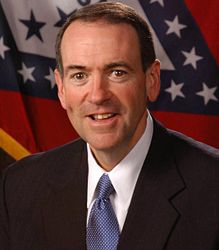
Today is Super Tuesday – if voting is taking place in your state – don’t let your opportunity slip by. Get out and have a say.
As I think about the campaign and the differences in opinion among “evangelical leaders” and the GOP I can’t help but notice some of the differences in the varied camps. It seems to become more and more clearer that the old guard – the so called “staunch conservatives” and those whose view of the Gospel may be more “conventional” are struggling to find their candidate. There’s not one candidate who they can grab hold of comfortably. Yet many who might lean more towards an “emerging” view of the Gospel seem to have no problem supporting a Huckabee presidency. Maybe I’m off a little bit but it seems like the GOP party is struggling between Western colonialism and new emerging ideas like caring for the poor, loving our neighbor, helping the downtrodden.
From the Mike Huckabee campaign:
Recently, out on the campaign trail, a voter asked if my personal faith informed my decisions. My answer was simple, just as it always has been: my faith is my life – it defines me. My faith doesn’t influence my decisions, it drives them.
Real faith makes us humble and mindful, not of the faults of others, but of our own. Because of our faith, we become less judgmental in that we see others having the same frailties as ourselves. Faith gives us strength in the face of injustice and motivates us to do our best for “the least of us.”
Our forefathers birthed this great nation in a spirit of faith – not a mandate telling us what to believe, but an acknowledgement that divine providence pervades our world.
I firmly believe the greatness of our nation then, does not come from our government or politicians, but lies in the hopeful, optimistic spirit of everyday Americans. Americans who acknowledge that providence has set us apart.
I have campaigned long and hard for the Republican nomination for President because I believe this to be true. There have been peaks and valleys. Yet throughout the journey there has always been my fervent hope that the good people of America will come together and support my candidacy, because they share these same principles and optimism. If you share these beliefs, your vote tomorrow is critical to my success. I humbly ask for your vote.
Now I could go on and tell you how great I am and why you should vote for me. I won’t. Instead, I have asked prominent religious leaders and friends to share with you, what they think of me and why your vote for me is important.
Dr. Rick Warren, Saddleback Church:
“I know most of the candidates running for president but I’ve known Mike Huckabee the longest, since we did our graduate degrees together in the late 70s. Mike’s a man of vision, compassion, and integrity. I’ve watched his uncanny ability to identify with normal people in ways that many leaders don’t. That’s probably why TIME named him one of the five best governors in America. He’s definitely presidential material. But honestly, what I find most appealing is his self-deprecating humor. That’s a key sign of a spiritually and emotionally healthy leader – someone who is comfortable with himself, is authentic, doesn’t wear a mask, and is secure enough to be humble. People love that.”
Janet Folger, World Net Daily:
“We don’t have the luxury to sit back and wait to see what happens without us. Too much is at stake. Bypass the “Fear Tier” who have negotiated the non-negotiables of life and marriage and turn to the candidate from the pro-family tier who has the best chance of winning: Mike Huckabee. The good news is now we don’t have to choose between a pro-life, pro-marriage candidate and a “tier one” candidate “who can win.” Huckabee just became both. Now we just need to unite behind him.”
Stephen Strang, who was recognized by Time magazine in 2005 as one of the “Top 25 Evangelicals in America”:
“Mike Huckabee is an outstanding communicator who has a proven track record of success as governor of Arkansas . He is a true conservative who holds values common to most Americans. Governor Huckabee is a strong, Bible-believing candidate who articulates our values as well as any politician in my lifetime.”
Rick Scarborough, who heads Vision America, a national coalition of Pastors whose mission is to call Christians to be proactive in restoring America to her Judeo-Christian heritage:
“In Mike Huckabee, we have a man who has successfully bridged the chasm that divides people of both parties who share common values and faith. At this time in American history, we desperately need someone to lead us who can step over the partisan divide and unite people if we are going to solve the massive problems facing our nation.”
Jerry Cox, who is also the past director of Unborn Child Amendment Committee:
“Long before his involvement in politics, he was a defender of the unborn, a promoter of character in our schools, and stalwart champion for traditional values. His compassion for people, his command of the issues, his faith in God, and his genuine desire to work with people on both sides of the aisle are a rare find in the politics of today.”
Jim Pfaff, who is president and CEO of the Colorado Family Action and has been active in pro-life/pro-family politics for more than 20 years:
“It is critical, at this time in the history of our country, that our elected representatives truly understand the significant role that families play in our culture today and in the future. Mike Huckabee has been a reliable champion for the values of faith, family and the protection of the unborn over many years of public service.”
Mathew Staver is Dean of Liberty University School of Law and founder and chairman of Liberty Counsel, a nationally prominent legal, educational and policy organization specializing in religious liberty, the sanctity of human life and the traditional family:
“We need a leader who understands and is prepared to confront radical Islamic terrorism, who will protect America and her boarders, who does not merely lip sync moral and religious values but who really believes and practices them, and who has the experience and personality to govern a divided Congress. Mike Huckabee is that man.”
Kelly Shackelford, who serves as Chief Counsel of Liberty Legal Institute and president of Free Market Foundation:
“The reason you are starting to see everyone coalesce around Mike is that he doesn’t just talk about conservative issues, he breathes them and has a passion for them. He speaks the truth with an honesty and grace that no other candidate can match in either party.”
Phil Burress, the president of Citizens for Community Values who won this year’s Focus on the Family Grassroots Action Award:
“I have met and interviewed most of the Republican Presidential candidates. After several months of research, I am pleased to announce that Governor Mike Huckabee is the most qualified candidate to hold the office of President of the United States ,” Burress said.
Some more thoughts from Chp 3 of Brian McLaren’s Everything Must Change:
Trying to spur some more discussion for our book club….
In Chp 3 McLaren talks about his visit to Bujumbura in Africa. As a meeting he was scheduled to speak at began he writes that the guy who brought him to the conference says that as a son of a preacher and going to church all his life, sometimes five times a week, in all his childhood he “only heard one sermon.”
Ouch! He says that one sermon was heard over and over again every week. “You are a sinner and you are going to hell. You need to repent and believe in Jesus. Jesus might come back today, and if he does and you are not ready, you will burn in hell.”
Growing up I can’t say that this was the case for me, but then again I can’t say I remember any sermons from my childhood through probably high school.
After graduating high school I began attending Baptist churches, including on very conservative Baptist church and I would say that that was almost the case for that particular church – only mixing in sermons about the importance of tithing.
How does that compare to your life growing up? How does that compare to English and Scottish churches or churches around the rest of the world? How do messages like that help Christians grow?
Is that typical in other churches? Do our churches continue to ignore ideas like hatred, distrust between tribes/neighbors, poverty, suffering, corruption, injustice? I feel that at encounter we’re closer to addressing these issues but we could be doing more.
“They told us how to go to heaven. But they left out an important detail. They didn’t tell us how the will of God could be done on earth.”
McLaren suggests this isn’t just an African problem – and I would tend to agree. Did North American church leaders teach the early colonists to treat the Native Peoples with love and respect? Did they consistently and with one voice appose slavery? Did they express outrage over the exploitation of factory workers or the second-class status of women? Did they/do we stand up for refugees and immigrants? Did they oppose white privilege, segregation, anti-Semitism, stereotyping or Muslims and other forms of ethnic prejudice? Did they see the environment as God’s sacred creation that deserves to be cherished and conserved?
Lots of places I believe the church has failed and continues to fail…
Jesus continued to talk about “the kingdom of God.” McLaren says this idea – contrary to popular belief – was not focused on how to escape this world and its problems by going to heaven after death, but instead was focused on how God’s will could be done on earth, in history, during this life.
McLaren continues and says the Gospel is not just a message about Jesus that focuses on the afterlife – but that the Gospel is the core message of Jesus that focuses on personal, social and global transformation in this life.
What does that mean to you? Is that idea contrary to your beliefs? Does it help answer some of the questions about your faith?
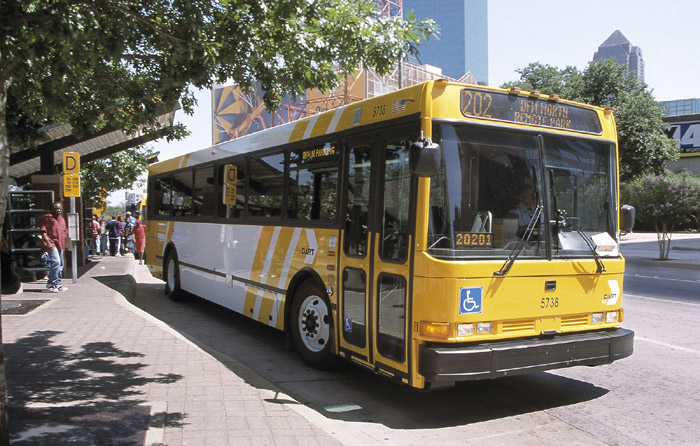
Just thought I’d play around with the numbers today and see what we save by me riding DART each month.
I estimate it’s roughly 30 miles from my house to the office. A daily round trip is 60 miles a day. Multiply that to an average month of 20 work days and you’re looking at 1200 miles a month just to get to work and back.
My truck averages between 16 and 19 miles per gallon. Not great, but we knew we’d be getting somewhere around there when we bought it. Averaging those 1200 miles at 17 mpg, it would take 70 gallons of gas to get me to and from work every month. At $2.70 a gallon (a low average/estimate) it would cost me $190 a month just to drive to work. That’s $2,280 a year.
That doesn’t include the wear and tear on my truck and the increased number of oil changes I’d need.
In addition to the fuel costs, you have to find a place to park the truck. Across the street from my office is a parking lot that charges $8 a day. There’s a parking garage that’s super small – not made for full size trucks that costs $5 a day. The lot I do use when I have to drive costs $3 a day and there’s a cheaper one across the street from it that costs $2 a day.
So at minimum, I’d pay $40 a month to park. At maximum, I’d pay $160 a month to park.
That’s $230 – $350 a month, or $2,760 – $4,200 a year, just to drive my truck to work.
The cost of a DART monthly pass is only $80 a month or $960 a year. That’s a minimal savings of $1,800 a year! If we wanted to pre-pay for the year, I could get a yearly pass for $500. Giving us an additional $460 savings per year.
Plus, there’s the added benefit of getting to read and/or sleep on the bus ride. The knowledge that you’re not adding to the poor air quality in Dallas and the shorter drive time in the morning thanks to getting to utilize the HOV lane on the daily bus ride.
Now in full disclosure I do get a parking stipend of $110 a month for working in my office but that would come whether I rode DART or parked my car nearby. But with the cost of the DART pass and the stipend I get an additional $30 a month in savings.
What other ways have you found to save money on your daily commute?