I may need to find new work May 6

Ever have a dream that you’re just dying to have come true?

And then when it does you realize, there’s nothing left for me to do here?

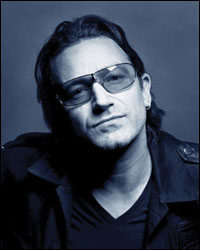
The World Affairs Council of Dallas/Fort Worth will present Bono, lead singer of Irish Rock Band U2, activist and co-founder of DATA (Debt, AIDS, Trade, Africa), on Friday, May 5 at 7:30 p.m. at the Music Hall at Fair Park. This TIME Magazine Person of the Year in 2005 has used his celebrity worldwide to influence the powerful to the benefit of the poor. Bono will speak on his work to bring attention and resources to the fight against global AIDS and poverty in Africa.

Lifepoint Church


Winner of the best Church website in Ellis County – hands down: Lifepoint.org.
This church is a new plant from several other churches and just started meeting on Easter Sunday (I believe).
But from the looks of the website and the information posted there, I’m going to visit for sure.
It draws me in. They even have a blog 🙂

Lifepoint is a new church in Red Oak, TX. It is the point of our life to treasure Christ above all things. We are here to inspire loving relationships with God and to create loving relationships with others. Lifepoint understands it’s purpose is to participate in God’s mission by loving and serving others in His name.

More from their website:

Join us on a Sunday morning real soon! Here’s what you need to know:
@ 9:30a we dig into the Bible. Each week we will read and discuss one chapter. If you have a Bible, bring it…if not, we’ll have one for you!
@ 10:30a you have a couple of options: (1) grab another cup of coffee and catch up with some of your Lifepoint friends (or meet some new ones!) (2) Join our worship band for pre-service-worship for a more intimate time to meet with God before the full service starts. Normally, this time will include some songs, scripture reading, and meditation and prayer.
@ 11:00a we begin our Worship Service. Join us for refreshing and meaningful worship and an inspiring message from scripture.
There are several other informal gatherings that happen throughout the week for worship and fellowship. Please email us or call (469)955-2968 to find out when and where to be!

Click here for the church values
I didn’t see any specific info on specific groups or ministries, but otherwise I think most information I would look for on a website was readily available.
Just got a tip on Encounter This as well, I’ll check it out too.

American giveaway backfire?


Eric shared a Letter to the Editor in the DMN today. If you haven’t heard, American Airlines gave away free one-way tickets to guests at a Dallas Mavericks Game last week. But you had to fly from Love Field in Dallas, which is limited on its flights by the American Airlines supported Wright Amendment. American Airlines and Southwest Airlines are currently battling their sides in congress, the media, the public, as well as the Fort Worth and Dallas city councils.

Perhaps giveaway will prove anti-Wright point
Wouldn’t it be odd if American Airlines’ ticket giveaway highlighted how bad the Wright amendment is for travel?
Your story touted that people receiving the free tickets will be able to travel anywhere American flies from Dallas Love Field. They might be very frustrated to find that means only Kansas City, St. Louis and a few cities in Texas because of Wright.
Maybe American Airlines inadvertently will encourage repeal of the “Wrong amendment” with this promotion.
Stefan Koziolek, Dallas

Another thought on the issue:

I’m no fan of American or D/FW Airport
Re: “Mavs fans score air tickets,” Thursday Business.
American Airlines passes out tickets at a Mavs game for Love Field? Disingenuous.
American trying to promote Love Field? Hypocrisy.
Bottom line? People who live east of Dallas, in the eastern and northern parts of Dallas and most of the rest of the metro area don’t want to use Dallas/Fort Worth International Airport – not just because of distance but because it is possibly one of the worst U.S. airports.
When I am forced to fly American, I am always amazed by the lack of service and the employees’ arrogance, not to mention the price gouging.
Nobody wanted D/FW Airport except for people who live in the western suburbs of Dallas, including the big suburb of Fort Worth. It’s Amon Carter’s revenge and a folly for North Texas.
Rob Lofland, Lindale

Churches: like any large volunteer organization

Thomas has found a great quote from Malcom Gladwell and an interesting blog on Rick Warren:

Churches, like any large voluntary organization, have at their core a contradiction. In order to attract newcomers, they must have low barriers to entry. They must be unintimidating, friendly, and compatible with the culture they are a part of. In order to retain their membership, however, they need to have an identity distinct from that culture. They need to give their followers a sense of community—and community, exclusivity, a distinct identity are all, inevitably, casualties of growth. As an economist would say, the bigger an organization becomes, the greater a free-rider problem it has. If I go to a church with five hundred members, in a magnificent cathedral, with spectacular services and music, why should I volunteer or donate any substantial share of my money? What kind of peer pressure is there in a congregation that large? If the barriers to entry become too low—and the ties among members become increasingly tenuous—then a church as it grows bigger becomes weaker.
One solution to the problem is simply not to grow, and, historically, churches have sacrificed size for community. But there is another approach: to create a church out of a network of lots of little church cells—exclusive, tightly knit groups of six or seven who meet in one another’s homes during the week to worship and pray. The small group as an instrument of community is initially how Communism spread, and in the postwar years Alcoholics Anonymous and its twelve-step progeny perfected the small-group technique. The small group did not have a designated leader who stood at the front of the room. Members sat in a circle. The focus was on discussion and interaction—not one person teaching and the others listening—and the remarkable thing about these groups was their power. An alcoholic could lose his job and his family, he could be hospitalized, he could be warned by half a dozen doctors—and go on drinking. But put him in a room of his peers once a week—make him share the burdens of others and have his burdens shared by others—and he could do something that once seemed impossible.
When churches—in particular, the megachurches that became the engine of the evangelical movement, in the nineteen-seventies and eighties—began to adopt the cellular model, they found out the same thing. The small group was an extraordinary vehicle of commitment. It was personal and flexible. It cost nothing. It was convenient, and every worshipper was able to find a small group that precisely matched his or her interests. Today, at least forty million Americans are in a religiously based small group, and the growing ranks of small-group membership have caused a profound shift in the nature of the American religious experience.”
As I see it, one of the most unfortunate misunderstandings of our time has been to think of small intentional communities as groups ‘within’ the church,” the philosopher Dick Westley writes in one of the many books celebrating the rise of small-group power. “When are we going to have the courage to publicly proclaim what everyone with any experience with small groups has known all along: they are not organizations ‘within’ the church; they are church.