The beauty of Twitter

Here’s one of those great articles I wish I had written. From @jontangerine… (HT to @stealingsand)

I like Twitter because…

It reminds me is that human beings are still tribal. As an example, if you check your own address book, or think about your family and friends, they probably number no more than two hundred people. We may have more in the book, but it’s rare for our intimates to be greater than two hundred people. Our networks are geographically dispersed these days. Even if your network is mostly in one location, people are so busy living that it can be difficult to stay in touch. Twitter is a facsimile of living and working in proximity for me, and provides something unique, too

Jon touches on a few things he’d like to see on twitter. I’d ditto those as well and add that I’d like to see easy ways to track physical locations as well. There are other social networks that will track your location. BrightKite will even alert you when other users or friends are in your area. A very cool feature indeed. But there’s not a good BrightKite app for Blackberry yet, so that’s a bit of a bummer for me and will probably keep me from switching anytime soon.

I also find this line from Jon’s article interesting, “but it’s rare for our intimates to be greater than two hundred people.”

I think that’s true in so many arenas of life. I only follow 66 people on twitter (and leave the SMS/txt message updates off for all but maybe 5 people) and while I have over 300 “friends” on facebook I really only keep up with/track half of them (if that). But of course it is nice when something catches my eye from those other 150ers and I can get updates on them as well.

I also see the 200 people limit playing out in churches/workplaces and more. It’s really hard to get to know more than 200 people or so in any regular setting. Even if there are 15,000 people in a room, do you really know more than 200 of them? Can you know more than 200 and build real relationships with them?

I think that’s what I love about online communities like Twitter. I know 10xs more about folks like @Jess_Hays and @sgalloway since they joined Twitter than I ever learned about them just seeing them for a couple hours on Sunday morning. The same goes for folks who constantly fill out surveys on Myspace. I learned tons of things about folks in my tribe thanks to them taking some time to be intentionally open.

What about you? What makes Twitter beautiful for you? Do you agree that it’s rare to have intimate relationships with more than 200 people? Do you think that number is much higher or less?
re: Tribal faith

Listening to Rob Bell share some great thoughts and ideas on Tribes (taken from Phil 3).

A great thought ::

“Sometimes when some people say ‘the gospel’ they’re really talking about tribal identity masquerading as the gospel… and Jesus is bigger than any tribe.”

“Beware of dem dawgs!”

Don’t let the tribe come between you and The Gospel or Jesus.

Jesus for president

If Jesus ran for president – his opponents attack ad might look something like this…
(Btw didn’t like the John
McCain bit at the end but otherwise thought it was pretty spot on)

in other news (a repeat video I’m sure here)…

end poverty!

Today is Blog Action Day 08 – focused on ending poverty. I caught on to this a little late. Sorry about that. But if you’ve read my blog for any length of time I think you’ll know how frustrated I get to see people living in poverty.

I think you know it rattles me crazy when folks refuse to help a brother or sister in need.

I think you know I think our reaction to the poor and to the hurting around our world is a direct indication of how we view God (and yes that can be taken multiple ways).

I don’t if I have amazing words of wisdom to share today, but thought I’d share some visual media with you to help us each reflect on the issue of poverty in the world around us.

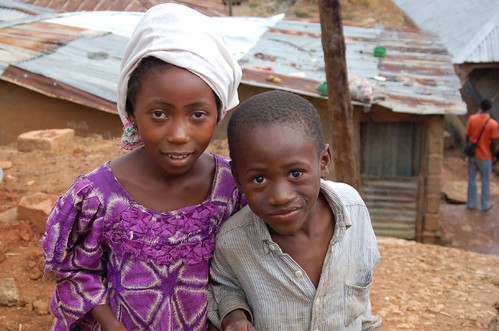
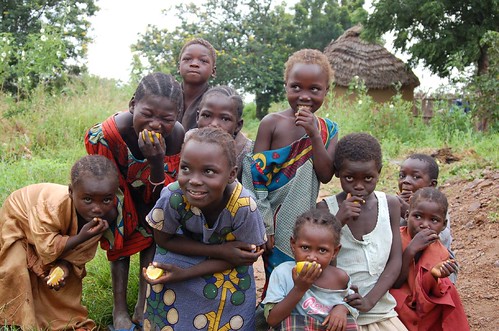
All the media is from real people, whom I’ve had the honor and privilege of meeting and sharing life with in some way shape or form. I wish I could do more and God willing — I will. Most of the pictures are from Nigeria. The videos are from Waxahachie, Nigeria and Dallas. The point? — There are hurting people, living in poverty everywhere — all around us.

I was hungry and you gave me no meal,
I was thirsty and you gave me no drink,
I was homeless and you gave me no bed,
I was shivering and you gave me no clothes,
Sick and in prison, and you never visited.


Check Judaism. Check Islam. Check pretty much anyone.
I mean, God may well be with us in our mansions on the hill… I hope so. He may well be with us as in all manner of controversial stuff… maybe, maybe not… But the one thing we can all agree, all faiths and ideologies, is that God is with the vulnerable and poor.
God is in the slums, in the cardboard boxes where the poor play house… God is in the silence of a mother who has infected her child with a virus that will end both their lives… God is in the cries heard under the rubble of war… God is in the debris of wasted opportunity and lives, and God is with us if we are with them.

How M. Scott Peck saved my life

Well not me specifically — but Dave Schmelzer’s.

I’m reading Schmelzer’s book, “Not the Religious Type.”
In it, (chp 3 I believe) he gives a great explanation of how M. Scott Peck saved his life.
I hate to steal his thunder but this explanation really hit home with me and thought it was worth sharing here. After you read it, you can go out and buy the book for yourself :-).

Peck (via Schmelzer) says our spiritual lives are a lot like our regular physical lives in development but the timelines don’t always match up.
Peck says our spiritual lives can be categorized into 4 stages.

Stage 1, the infant or the criminal stage. We do what we want when we want with no regard to others or the rules.

Stage 2, the rules-based stage corresponds with ages six or seven. In this stage we’re suddenly concerned about pleasing the parents (or God) and concerned about what the rules are (and how we can follow them and ensure other people follow them). We suddenly want to be sure we’re following the rules all the time.
Schmelzer writes, that the institutions that best serve this stage are the military and the church. Both offer discipline and boundaries — and most churches and those in them are in stage 2. (I would add that educational institutions as a whole are also very much stuck in the stage 2 mindset.)

Stage 3 is the rebellious teen years. We question everything we learned in stage 2 and thus begins the battle between stage 2 and 3. If you’re in stage 2 in a religious community everyone on the outside is either a lawbreaker (stage 1) or a rebellious libertine (stage 3).

Schmelzer also notes that the Republican party could be easily be viewed as stage 2 and the Democrats could be stage 3. Stage 2ers will heap scorn on stage 3ers by using words like “liberal” — and use it as a word that’s so shameful you don’t even have to say why it’s shameful. Stage 3ers will scorn stage 2ers by just spreading the idea that they’re all idiots for believing all that they do.

Unfortunately most people in stage 3 don’t realize there’s a stage 4, the mystical stage. Suddenly in stage 4 you realize that most of the things you learned in stage 2 are probably right, but they’re much more richer and more mysterious than you ever would have imagined.

Stage 2 says, “Ok as of 3 p.m. I believed in Jesus so I’m going to heaven no matter what.” Stage 4 however would say “I think I believe but what does ‘believe’ actually mean? Am I believing now? Do I have to continually believe? Am I saved once, or is it a continual thing?”

Stage 2 folks would then look at stage 4 folks with tons of suspicion and say, “They seem to be saying the same stuff, but every word out of their mouths is slippery. Why wont they just stand on the truth. What kind of tap-dancing cowards are these people?”

So there you go – how M. Scott Peck saved my life – or sort of. Or something like that. What does “saved my life” really mean? 🙂

Looking forward to the rest of the book.